
How To Control Ants
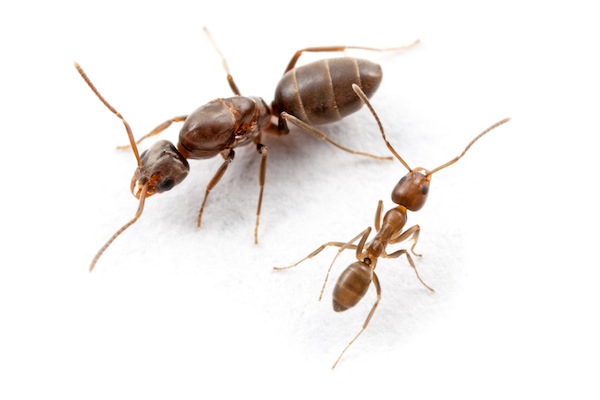
Ants can certainly be annoying….. and as many have found out, ant control is not always that easy!
Their small size, large numbers and complicated social structure make controlling ants a continuous battle. Identifying the ant species present can certainly be useful, as it helps determine the potential nest locations and likely size of the nest.
However, even without identifying the species present, there are some basic principles of ant control that will allow the homeowner to get on top of almost any ant problem…..although it sometimes takes a bit of patience and a bit of persistence!
Ant Identification

What do they look like?
- Ants are a typical insect with 3 body segments and six legs.
-
Ants are often called social insects as they have different types of ants performing different roles within the colony.
- The reproductive ants (kings and queens) tend to be the largest ants in the colony. These are the winged ants that you may see leaving the nest in large numbers to start a new one. They mate and lose their wings before starting a new nest.
- The majority of ants in the colony are the workers which carry out most of the day to day work. For some species the workers are all the same size, for others the workers can vary in size.
- Some species also have a soldier caste to help with colony defense – these tend to be larger than the normal workers.
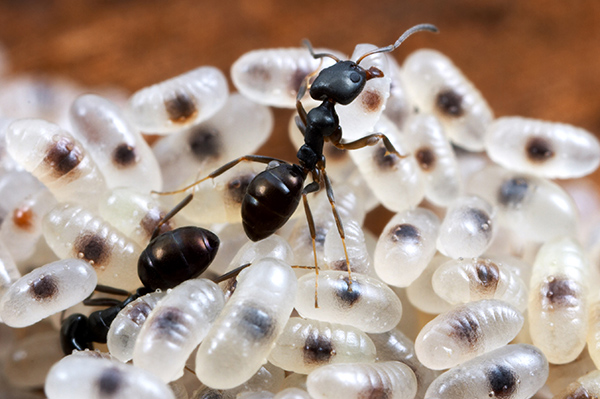
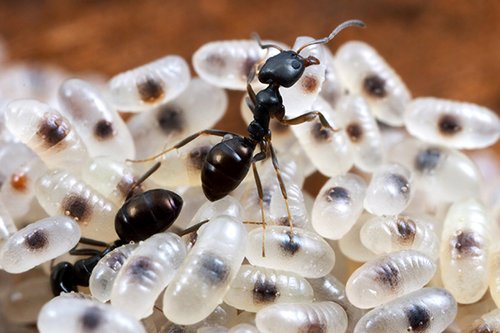
- Ants hatch from eggs into larvae and then pass through a pupal stage before turning into adults ants. Eggs, larvae and pupae are normally found in the nest, but are sometime visible when being carried by worker ants if the nest is on the move.
- Generally ants are often split into black ants and brown ants, but unless you actually identify the species, it doesn’t really help with development a successful control strategy.
Types of Ants
Common species nesting in houses
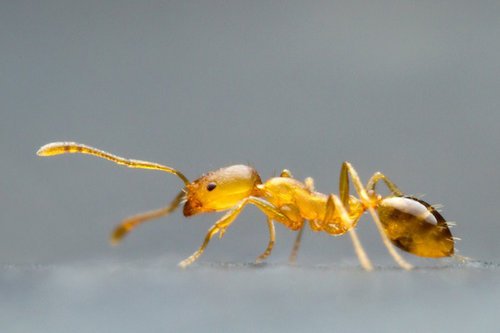
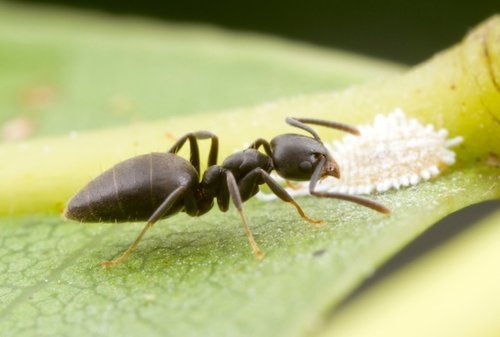
Common species around the home and garden
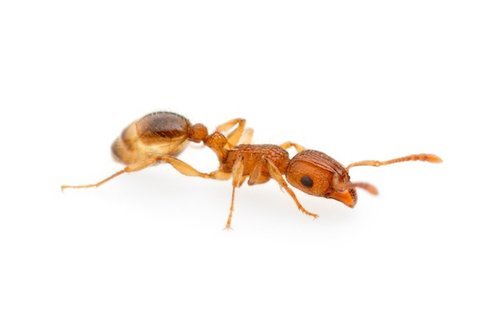
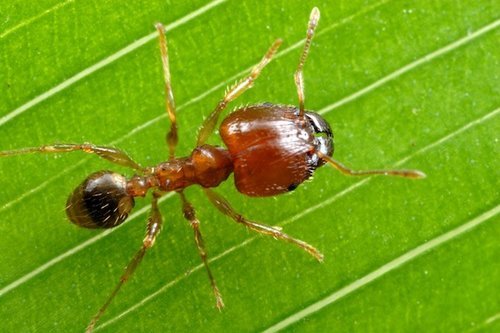
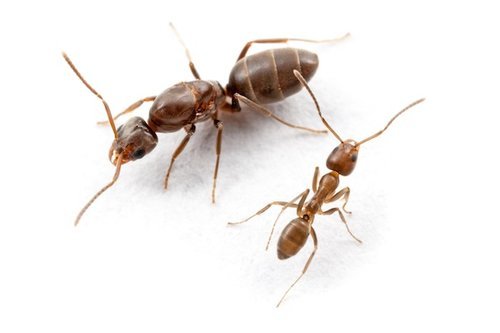
Back to Ant Menu
Key Ant Facts
- To get lasting control of an ant problem you will need to kill all the ants in the nest, especially the queen. If the queen survives, she can start laying eggs again and the ants will return.
-
However, even if you can find the nest, it’s not so easy to kill the queen because
- Many ant species have more than one queen
- Many ant species have multiple sites as part of the same colony
- Some of the main pest species, such as the Argentine ant and coastal brown ant, are called invasive ants, as they cause problems all around the world. They are very successful in invading and taking over an area. One of the reasons for this success, is their multiple nest / multiple queen colony structure, sometimes allowing the colony to spread to cover many kilometres!
- Even if you are successful in killing the nest causing the problem, other ants will often move into the vacated territory. This makes controlling ants a continuous battle and the best strategy is a two pronged approach; reducing ant pressure outside and preventing ants from entering the home.
Back to Ant Menu
Signs Of Ant Infestation
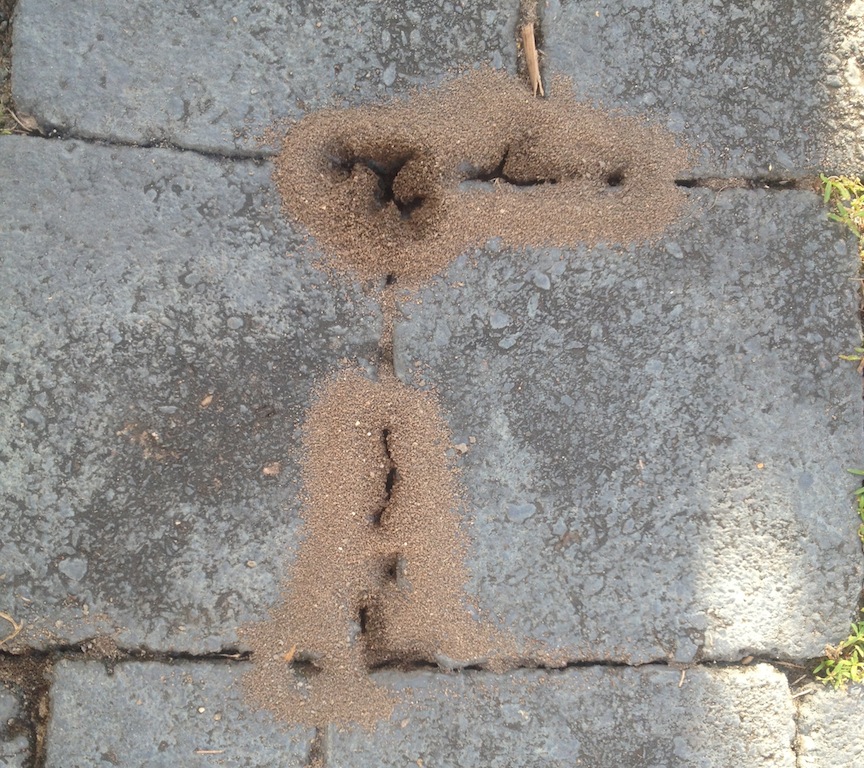
Ant infestations inside the home are pretty obvious…. you see ants! Often, these may be ants nesting outside coming in looking for food and moisture. The key action is to act as soon as you see them. If you leave it a few days or weeks, they will establish your home as one of their main feeding sites and will try and keep coming back, making them more difficult to control.
If you find ants in your house and cannot find an entry point from the outside, the ants may be nesting in or under your house. They quite often nest in wall voids, roof spaces and behind cupboards. This can take a bit more detective work to find the nest and apply a treatment.
Signs of an infestation outside may include piles of dirt and sand appearing between pavers and mounds in the lawn. Although this is annoying, it can be helpful in applying a treatment as it shows where they are nesting and therefore where to apply the product.
Main Pest Season
For New Zealand the main pest season for ants are the warmer months. The queen starts her egg laying in Spring with the nests reaching maximum size in late summer and early Autumn. They can sometimes be a problem in Winter, especially if they are nesting indoors.
Back to Ant Menu
Ant Prevention Tips
Good Hygiene is Critical:
- Clean away split food and dirty dishes straight away
- Ensure rubbish is put in secure containers
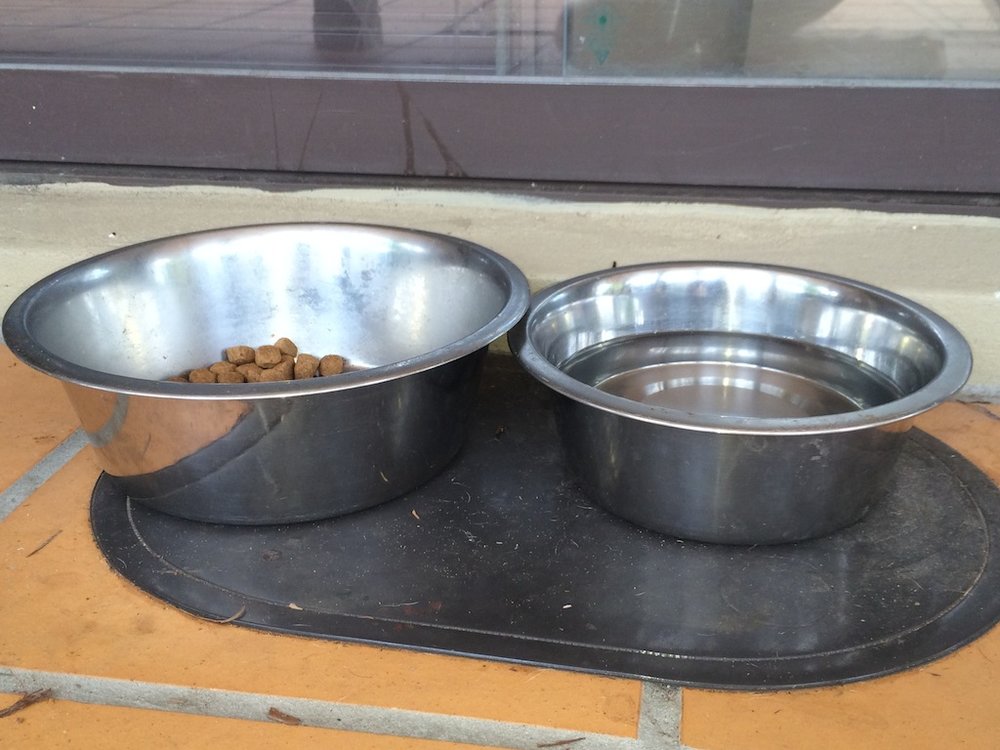
- Don’t leave petfood in bowls on the ground (or if you do, place the bowl in a large bowl of water to create a “moat” which the ants can’t cross)
- Keep food in sealed containers
- Seal any small entry holes in the exterior walls / around doors and windows
Back to Ant Menu
Ant Control Tips

Ants are actually very easy to kill with almost any insecticide. The problem is, if you only spray the ants you see, the chances are there are many more in the nest ready to replace them! And so the ant problem will return. To gain lasting control, you need to spend some time trying to locate entry points into the home and if possible find the nest. Once you have worked out where the ants are coming from you will probably need to use a number of products to gain control.
If you can locate the nest, you will have the best chance of complete control. “Flooding” it with insecticide using a ready to use pump pack product will deliver the best results.
However, it is not easy to find the nest, and even if you do, often it can be hard to reach. Ant baits are the best way to provide lasting protection as they kill the nest. By applying bait where ants are active, they do they hard work for you, taking the bait (containing a controlled release insecticide) back to the nest, where it is fed to the rest of the colony, leading to its destruction.
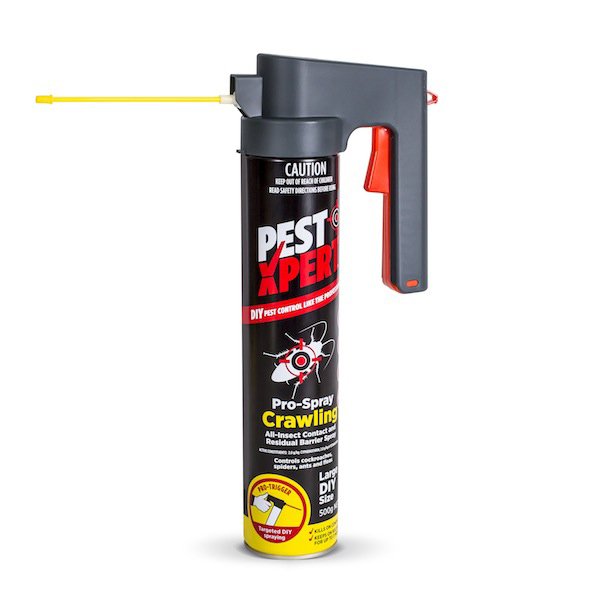
Insecticide sprays (aerosol or ready to use pump pack) are useful for spraying around entry points and along surfaces where you see the ants trailing. They can also be useful for spraying internal areas which you want to keep clear of ants (such as kitchen cupboards). PestXpert Pro Spray Crawling is ideal.
An insecticide spray around the complete perimeter of the property and entry points is a key part of a control program. Make sure you treat an area 50 cm to 1 m up the wall and the same distance out from the wall across paths and flower beds. Depending on the level of exposure to sun and rain, re-treatment will need to be applied through the year.
Treatment between pavers with a liquid insecticide such as Pro-Spray Outdoor Perimeter will prevent ants making a mess of your driveway / paths.
Back to Ant Menu
PestXpert Products For Ants
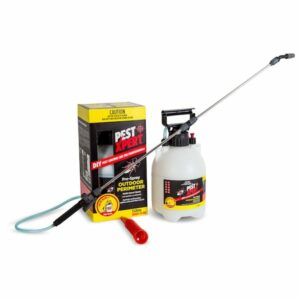
- For outdoor treatments and injection into nests, Pro-Spray Outdoor Perimeter has the 1m spray wand for safe application.
- For spot treatments and for lasting protection in cupboards the Pro-Spray Crawling aerosol with its extendable nozzle does a great job.
Back to Ant Menu
FAQs about Ants
Back to Ant Menu
PestXpert Blog
For the dedicated PestXperts…
The PestXpert Blog gets updated regularly with articles on pests, products and tricks of the trade.
Take your pest control knowledge to the next level and say goodbye to pest problems.
-
 5 Facts About Carpet Beetles You Need to Know
Carpet beetles are a common fabric pest. Although their name indicates they only eat carpets or rugs, they will eat a wide range of animal fabrics including wool, fur, silk, felt, feathers and leather. As with any pest problem it…
-
 Top 10 Hiding Places for Silverfish in Your Home
Secretive and nocturnal, a silverfish infestation can go unnoticed for some time. A versatile, primitive insect, silverfish can inhabit a wide range of hiding places in your house. Silverfish like to eat starchy foods, so they find paper and cardboard…
-
 DIY Pest Control – Which insecticide should you use?
What type of insecticide should you use? If you’ve done your own pest spray at home before you’ve probably got your sprayer sitting in the garage. Insects are back, and it’s time to re-spray the home… but what insecticide should…
-
 4 Key Actions for a Pest Free Christmas
When you’re entertaining you want to make sure your home is pest free. Check out our 4 step action plan for a pest free home this Christmas
-
 Cockroach infestation? Use a cockroach bomb!
If you have a persistent cockroach problem or maybe a cockroach infestation, you need to pull out the “big guns” and a cockroach “bomb” is just the ticket!Insecticide “bombs” or “foggers” are technically known as “total release aerosols” – once…
-
 General Pest Treatments – Spray like a Professional!
When you buy a pest control product do you ever consider the “applicator” or sprayer? Possible not, but why is it important? Choosing the wrong type of sprayer can be one of the biggest sources of consumer disappointment when using…