
How to Get Rid of Flies - The Ultimate Guide to Fly Control
|
|
Houseflies are a genuine bioweapon, known to carry a range of pathogens including Salmonella, dysentery, cholera, typhoid and polio, even leprosy and anthrax, so there’s every reason to make sure flies are kept out of the house and well away from the kitchen. Fortunately, with a bit of knowledge, making sure your home is a fly free zone is fairly straight forward.
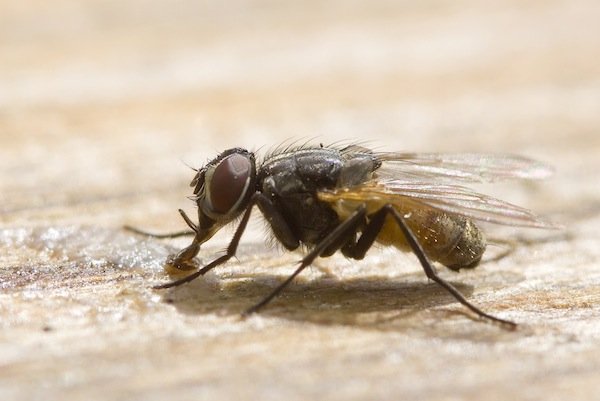
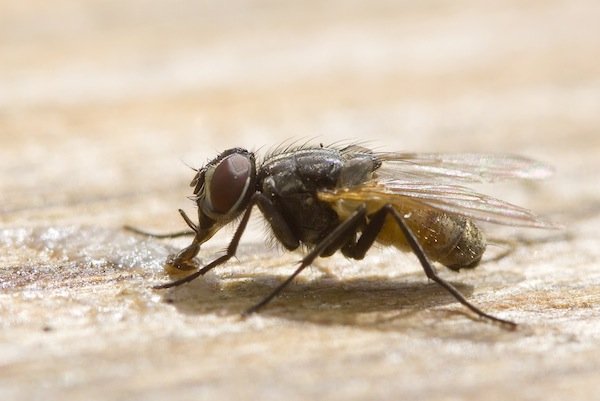
Housefly feeding by liquefying food and sucking it up
Why are houseflies so dirty?
Although the housefly is probably the most common fly you will find around your home, there are a number of fly species, which includes the housefly, collectively called filth flies. They get their name because they prefer to live, eat and breed around rotten organic matter – manure and garbage are much preferred! It’s therefore not surprising that they pick up a range of pathogens. Of course, when they then land on your food or kitchen surfaces, they can transfer one of the many pathogens they carry and cause illnesses and disease..
Fly Investation Prevention Tips
If you have a housefly problem you need to find the source of the problem and it’s probably due to there being a suitable breeding site / food source nearby. By eliminating housefly food sources and breeding sites, you can both make your home less attractive to houseflies thereby reducing their number.
Our top 5 Tips to Make Your House Less Attractive to Houseflies:
- Make sure waste is placed in sealed bags, inside sealed garbage bins
- Pick up and dispose of any pet faeces from the yard and garden
- Avoid using chicken manure as a fertilizer
- Don’t create compost heaps
- Don’t leave uneaten pet food out

Well-fitted fly screens will keep flies out of the house!
Fly screens aren’t always the most popular home addition but in areas of high fly pressure, they really are the best solution to prevent flies entering the home. But they need to be well fitted and be in good order (no holes or tears). Of course, a good fitting screen is only works if the doors are kept closed!
How to get rid of flies outdoors?
Houseflies can fly long distances, so even if you eliminate breeding sites around your home, they can still fly in from the surrounding areas. Whilst ensuring your BBQ is 100% fly free is probably not realistic, there are a few fly products that can keep numbers in check:
- Spraying the external walls of your home and other fly resting places with a long-lasting insecticide, such as PestXpert Pro Spray Outdoor Perimeter
- Use fly traps which contain an attractive food source to lure flies in, however these are not for everyone as the traps may end up with numerous fetid fly bodies which can look quite disgusting
- Fly paper, although old fashioned and a bit unsightly, can be effective as flies are attracted by the vertical lines created by the paper
How to get rid of flies indoors?
Hopefully fly numbers inside the home should be relatively low (assuming fly screens are in place). However, there are some different fly control options for inside the home.
- Electric fly units attract flies through UV light and then use either an electric grid to zap them or a glue board to trap them. Don’t place the trap near windows (a competing UV source) or near food preparation area (flies explode when they hit the electric grid!)
- Fly traps and sticky fly paper can also be used indoors
- But with well fitted fly screens the best way to deal with the occasional fly invader is with a premium fly spray such as PestXpert Pro Spray Flying
How to Use a Fly Spray
Trying to hit a fly directly with an aerosol spray is a challenge as they pick up the pressure wave from the spray and fly off before the insecticide arrives. The best way to spray for flies, and the aerosols are designed this way, is to carry out a “space spray”.
Close all the doors and windows in the room to be treated. Shake the can and spray into the air for several seconds before leaving the room and close the door. When you re-enter 10 minutes later the flies should be dead. This is a great technique for mosquitoes as well, as they can be hard to locate.
More details on How do fly sprays work?
Getting rid of other types of flies
Houseflies aren’t the only nuisance flies found around the home. Two other small pest flies that cause problems are the vinegar flies and drain flies. Learn more about how to get rid of vinegar flies and how to get rid of drain flies.
Flies are more than just annoying – – they are a health threat to your family, so it’s certainly worth trying to keep your home fly free. Of course, they are annoying too…
Recommended PestXpert Products


Author:
Gordon Reidy has over 30 years experience in Pest Control Product Development and Product Safety. As the lead formulator at PestXpert, he has helped develop some of Australia’s most trusted household pest solutions. With a PhD in Toxicology, Gordon is passionate about delivering effective, science-backed products that are safe for families and the environment.
Share This Post
Further Reading
-
 How to use a fly spray? How does a fly spray work?
How does fly spray work? The basics of all fly spray formulations are similar (but not the same) and most contain pyrethroid insecticides. These insecticides impact the nervous system of flies, causing their nerves to fire rapidly. This is why…
-
 The Top 3 Flies Found Around the Home
We all know that flies are a big problem in New Zealand. But not all flies are the same. When it comes to fly control around the home, it helps to be able to identify the type of fly, as…