
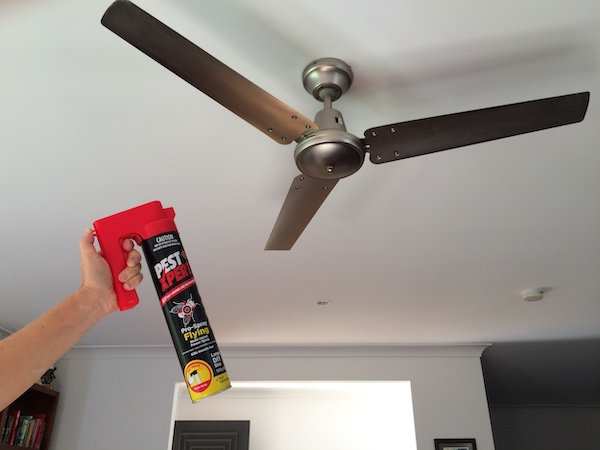
How to use a fly spray? How does a fly spray work?
|
|
How does fly spray work?
The basics of all fly spray formulations are similar (but not the same) and most contain pyrethroid insecticides. These insecticides impact the nervous system of flies, causing their nerves to fire rapidly. This is why they fly around in a crazy fashion after being sprayed and break dance on the ground, before dying. The insecticide needs to be dissolved in a solvent. Not only does his dilute the insecticide (only a small amount is required), but it is necessary to allow spray droplets to be formed when the aerosol is sprayed.
The type of insecticide, the type of solvent and the droplet size of the spray will all impact how fast it kills the fly (see below). This is where fly sprays are not the same, as there ia a lot of formulation expertise that goes into developing a high performing fly spray (such as PestXpert Pro-Spray Flying). However, even for high performing fly sprays, it’s important to know how best to use a fly spray so that it works effectively.
How to use a fly spray?
Teaching New Zealanders how to use a fly spray may seem a bit unnecessary, but you’d be amazed at the key mistakes many homeowners make when using fly sprays, which often result in less than optimal performance. So how should you use a fly spray?
Make sure it’s a fly spray and not a cockroach spray!
Firstly, when many homeowners grab the “fly spray” out of the cupboard, they normally pick up the nearest (or only) aerosol, whether it is a genuine fly spray or not. Now, they will probably all work, but the performance will vary greatly. Broadly speaking there are flying insect aerosols and crawling insect aerosols. The flying insect aerosols are (not surprisingly) designed for flying insects. They produce very small droplets, which have a long “hang time”. They also tend to be “water based”, making them gentle on the nose. By contrast, the crawling insect aerosols are solvent based and produce large droplets….. great for cockroaches, but they rather tend to plummet to the ground when sprayed in the air!
Direct spray or space spray?
There are two options when it comes to spraying flies – go for a direct spray or do a space spray?
Well, as many will know, to hit housefly with a direct spray from an aerosol is no mean feat! We’ve all chased flies around the room. Even when they have landed, they tend to take off as soon as they feel the air movement from an aerosol discharge. As such, the best way to treat most flying insects (especially the fast moving ones) is to use the aerosol as a “space spray”.
For a space spray treatment, spray the aerosol into the air in the general direction of the insect or into the room generally. Normally a 2-3 second burst will suffice. Assuming you have used a flying insect aerosol, the long “hang time” of the droplets will create a cloud of insecticide, which the insect cannot avoid.
Shake before you spray!
One other point to note, is that since flying insect aerosols tend to be water based aerosols, they do require shaking before spraying to mix the formulation properly before use.
You can treat surfaces for long lasting protection
Now if you want to provide longer protection against flying insects, a number of flying insect aerosols also have label claims allowing them to be sprayed onto the surfaces where insects will land. Areas to spray would include fly screens, walls and behind / under furniture (for mosquitoes), but not food preparation surfaces. If you are unsure as to whether it may stain a particular surface, check the label and do a test spray on a small, inconspicuous area first. Remember to always read the label before use.
For professional level flying insect control PestXpert Pro-Spray Flying is the ideal fly spray for flies, mosquitoes and other flying insects. Learn more about top 3 flies around homes and how to get rid of flies.
PestXpert Products for Fly Control


Author:
Gordon Reidy has over 30 years experience in Pest Control Product Development and Product Safety. As the lead formulator at PestXpert, he has helped develop some of Australia’s most trusted household pest solutions. With a PhD in Toxicology, Gordon is passionate about delivering effective, science-backed products that are safe for families and the environment.
Share This Post
Further Reading
-
 What's Eating My Food? Stored Product Pests
Pantry pests is the common name given to insects that infest stored products such as flour, cereals and indeed any dried foods. Sometimes you may not be even aware your food has been infested, but when you do… yuck! But…
-
 The Top 3 Flies Found Around the Home
We all know that flies are a big problem in New Zealand. But not all flies are the same. When it comes to fly control around the home, it helps to be able to identify the type of fly, as…
-
How to get rid of pantry moths
You may have noticed some small moths flying about the kitchen at dusk or at night – not something that would normally bother you. However, you then find some strange webbing material in some open biscuit packets and a bag…
-
 The 5-Step Mosquito Control Guide for Homeowners
Whether you have to run inside at dusk to avoid the mosquito swarms, or are kept awake at night by high pitched whining in your ears, mosquito problems can be very annoying! To successfully deal with a mosquito problem, it’s…
-
 How to Get Rid of Flies - The Ultimate Guide to Fly Control
Houseflies are very annoying, but they also carry a wide range of diseases including Salmonella, cholera, even leprosy and anthrax!