

How to get rid of pantry moths
|
|
You may have noticed some small moths flying about the kitchen at dusk or at night – not something that would normally bother you. However, you then find some strange webbing material in some open biscuit packets and a bag of flour. You look closer and find a small pale caterpillar. You investigate further and notice some webbing and a small brown case (the pupae) up on the ceiling. The penny drops – you have a pantry moth infestation!
The Summer months are the peak season for pantry moths. Although there are a few species of “pantry moth”, the main species in New Zealand is the Indian Meal moth. Eggs are laid by the adult moths on or near a suitable food source. They will eat a wide range of food including cereals, biscuits, flour, nuts, dried fruit, spices and cocoa. It is the larvae that hatch that cause all the damage. The larvae are very adept and persistent in seeking out suitable food. The small larvae are capable or moving around the thread of a screw top container, even with the top on! Larger larvae are capable of chewing through plastic wrappers on unopened food packets.
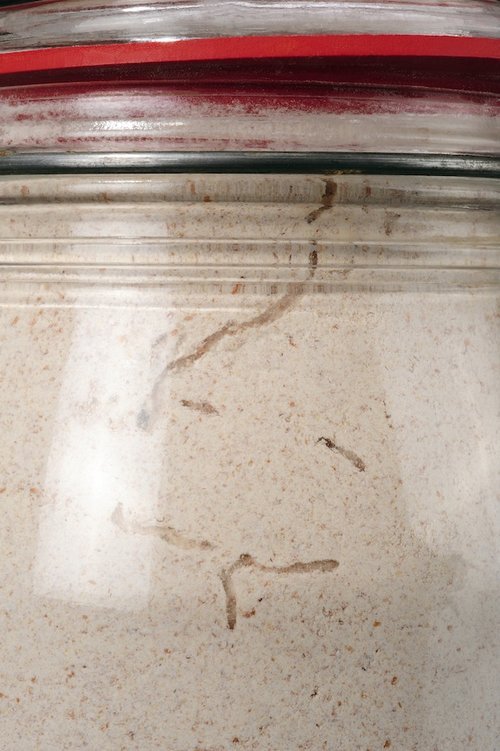
Since the adults do not fly great distances, unless the adults moths have flown in from a neighbour’s house, the likelihood is that they will have come in on some of the food items you have bought. Once you have a pantry moth infestation, they can be difficult to eradicate unless you are thorough in your treatment.
Pantry moth inspection and treatment
There are a number of key steps to eliminate the infestation:
1) Inspect all your food cupboards and each container individually. Don’t assume just because the container looks secure or unopened that it will not have been affected.
2) Throw out all affected food. Place into sealed bags and remove from house immediately.
3) Clean all food cupboards. Vacuum all shelves and corners, then wash with soap and water. This is to remove all eggs and pupae.
4) Spray all shelves with an insecticide. Spraying cupboards, particularly the edges and corners of shelves with provide lasting protection from the larvae. Make sure the product is labeled for this use and ensure no food comes into contact with the treatment. (see below)
5) Place all food in insect proof containers. This means hard plastic containers with sealed lids. (Remember they can crawl around the thread of screw tops!).
6) Spray any adult moths with a “fly spray”, such as PestXpert Pro-Spray Flying. This targets the adults before they can breed or lay (any more) eggs. Pantry moth sticky traps can be used as part of a treatment. However, they only target male moths as they use female pheromones as their attractant.
Once you have gained control, make sure you maintain a good cleaning and storage regime in the kitchen and don’t forget to inspect incoming good for unwanted hitch-hikers.
Pestxpert Products for Pantry Moth Treatments
Pro-spray flying is better for adult moths and Pro-Spray Crawling is better for treating surfaces.


Author:
Gordon Reidy has over 30 years experience in Pest Control Product Development and Product Safety. As the lead formulator at PestXpert, he has helped develop some of Australia’s most trusted household pest solutions. With a PhD in Toxicology, Gordon is passionate about delivering effective, science-backed products that are safe for families and the environment.
Share This Post
Further Reading
-
 How to use a fly spray? How does a fly spray work?
How does fly spray work? The basics of all fly spray formulations are similar (but not the same) and most contain pyrethroid insecticides. These insecticides impact the nervous system of flies, causing their nerves to fire rapidly. This is why…
-
 What's Eating My Food? Stored Product Pests
Pantry pests is the common name given to insects that infest stored products such as flour, cereals and indeed any dried foods. Sometimes you may not be even aware your food has been infested, but when you do… yuck! But…