How To Control Clothes Moths

clothes moth
Adult (Webbing) Clothes Moth

Finding a hole in your favourite piece of clothing is certainly upsetting….. and could be expensive! The most likely culprit for damage to clothes in wardrobes and drawers is the clothes moth.

Preventing clothes moths causing damage can be achieved by putting in place a number of preventative measures and using products to control clothes moths.

Clothes Moth Identification
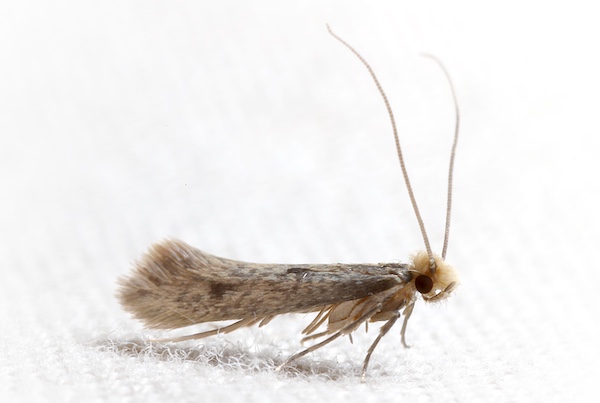
webbing clothes moth
Webbing clothes moth
case making clothes moth
Case making clothes moth

What do they look like?

There are actually two main species of clothes moth, the webbing clothes moth and the case-making clothes moth. Both get their names from the way the larvae protect themselves whilst they are feeding.

Webbing Clothes Moth

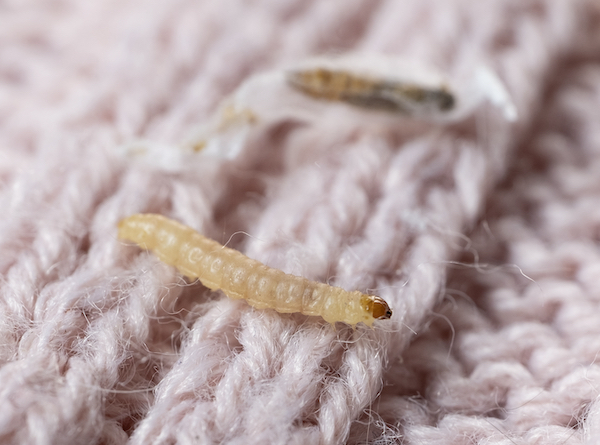
  • Larvae: Cream coloured larvae with a dark head. Hides under webbing whilst feeding. Webbing picks up droppings and pieces of fabric. When the larvae move to a new feeding site they leave the webbing behind.
  • Pupa: Webbing clothes moths spin a silken cocoon on the fabric they are feeding.
  • Adult moths: Light, gold coloured moth less than 1cm long.

Case-Making Clothes Moth: 

  • Larvae: Cream coloured larvae with dark head. The larvae make a case of silk which they take with them wherever they go. They can feed from either end and enlarge it as they grow. As droppings are added to the case, it takes on the colour of the fabric they are feeding on, so can be hard to spot.
  • Pupae: Case-making clothes moth larvae tend to find a crack or crevice to pupate in.
  • Adult moths: Darker than the webbing clothes moth with feint dark spots.

Back to Clothes Moth Menu

Key Clothes Moth Facts
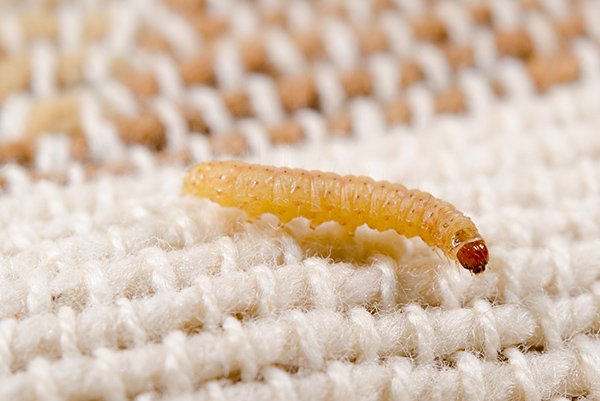
clothes moth larva
Webbing clothes moth larva
  • Generally, clothes moths are more common in the coastal areas of New Zealand, where the humidity helps their development. The case-making clothes moth prefers warmer parts of New Zealand, whereas the webbing clothes moth can be found all over New Zealand.
  • Clothes moth larvae eat a wide range of animal fabrics, but primarily fabrics containing wool. They will also damage fur, silk, feather and leather.
  • Clothes moths are poor flyers, likely to be hiding in dark areas near to where the larvae are feeding.

Back to Clothes Moth Menu

Signs of a Clothes Moth Infestation

Clothes moth larva and shed skin
Clothes moth larva and spent skin
  • Holes in fabrics, clothes and curtains, damage to furniture and bare patches on the edge of carpets in dark, low traffic areas. Also check out our blog – What’s eating my clothes?
  • Webbing or larval cases in clothes or fabrics.
  • Moths that fly up or crawl away from dark, secluded areas, when disturbed.

Main Pest Season

There is no particular pest season for clothes moths as they live indoors. However, the temperature does impact how much they eat and how quickly they progress through their life cycle. In the warmer parts of the North Island the life-cycle may be complete in as little as 3 months, but in colder areas it may take up to 6 months.

Back to Clothes Moth Menu

Clothes Moth Prevention Tips
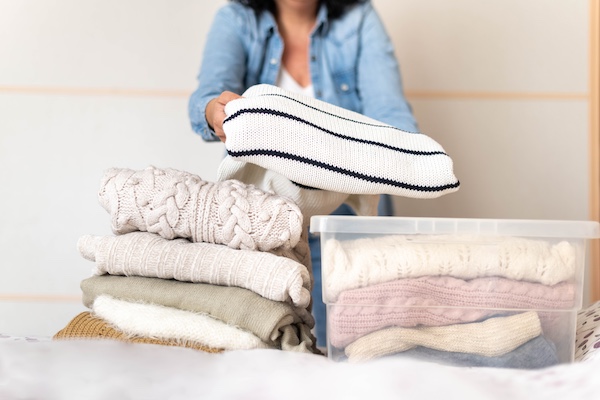
Packing away clothes into plastic boxes to protect from pests
  • Regularly vacuum all carpeted rooms, especially around the perimeter and under heavy furniture.
  • Regularly move cupboards and heavy furniture in carpeted rooms. Inspect the carpet for signs of damage and insect activity.
  • At the end of each season, wash and store clothes in a sealed bag / suitcase.

Back to Clothes Moth Menu

Clothes Moth Control Tips

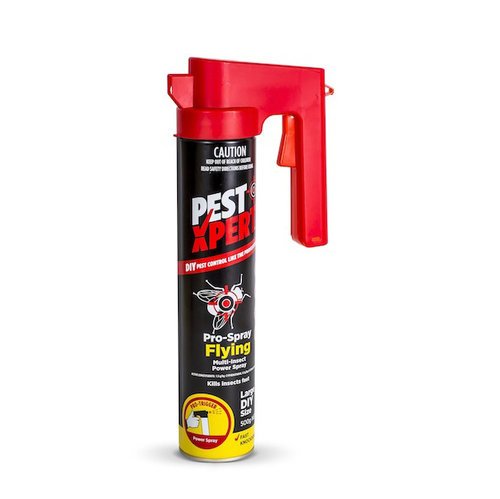
PestXpert Pro Spray Flying aerosol
  • Items of clothing or curtains suffering damage (or items close stored close by) should be placed in a sealed black plastic bag in the sun for 1-2 hours. This will kill any larvae / eggs. The items can then be washed. Any delicate items that may be impacted by heat should be inspected individually.
  • Any cupboards which have been sites of cloth moth activity should be treated with an insecticide spray (all shelves and drawers). Items of clothing should be removed before treatment and replaced once the treatment is dry.
  • If you suspect clothes moths presence / damage in carpets, all affected areas should be sprayed with insecticide (either aerosol or ready to use pump spray), paying particular attention to damaged areas and other areas under furniture.

Back to Clothes Moth Menu

PestXpert Products For Clothes Moths

  • PestXpert has two products that can be used to protect clothes in wardrobes and treat carpets and storage areas for clothes moths; Pro-Spray flying and Pro-Spray Crawling.
  • To treat surfaces, it is recommended that Pro-Spray Flying be the first choice for fabrics as it is a water based formulation. However, as with all products, test on a small area of surface or fabric first before spraying a large area.

Back to Pantry Moth Menu

FAQs about Clothes Moths

Back to Clothes Moth Menu

PestXpert Blog

For the dedicated PestXperts…

The PestXpert Blog gets updated regularly with articles on pests, products and tricks of the trade.
Take your pest control knowledge to the next level and say goodbye to pest problems.

  • Carpet beetle larva
    5 Facts About Carpet Beetles You Need to Know

    Carpet beetles are a common fabric pest. Although their name indicates they only eat carpets or rugs, they will eat a wide range of animal fabrics including wool, fur, silk, felt, feathers and leather. As with any pest problem it…

  • Silverfish
    Top 10 Hiding Places for Silverfish in Your Home

    Secretive and nocturnal, a silverfish infestation can go unnoticed for some time. A versatile, primitive insect, silverfish can inhabit a wide range of hiding places in your house. Silverfish like to eat starchy foods, so they find paper and cardboard…

  • Pest Control Spray to outside of house
    DIY Pest Control – Which insecticide should you use?

    What type of insecticide should you use? If you’ve done your own pest spray at home before you’ve probably got your sprayer sitting in the garage.  Insects are back, and it’s time to re-spray the home… but what insecticide should…

  • 4 Key Actions for a Pest Free Christmas

    When you’re entertaining you want to make sure your home is pest free. Check out our 4 step action plan for a pest free home this Christmas

  • cockroach eating a pear
    Cockroach infestation? Use a cockroach bomb!

    If you have a persistent cockroach problem or maybe a cockroach infestation, you need to pull out the “big guns” and a cockroach “bomb” is just the ticket!Insecticide “bombs” or “foggers” are technically known as “total release aerosols” – once…

  • PestXPert Outdoor Perimeter Spray product image
    General Pest Treatments – Spray like a Professional!

    When you buy a pest control product do you ever consider the “applicator” or sprayer? Possible not, but why is it important?  Choosing the wrong type of sprayer can be one of the biggest sources of consumer disappointment when using…